
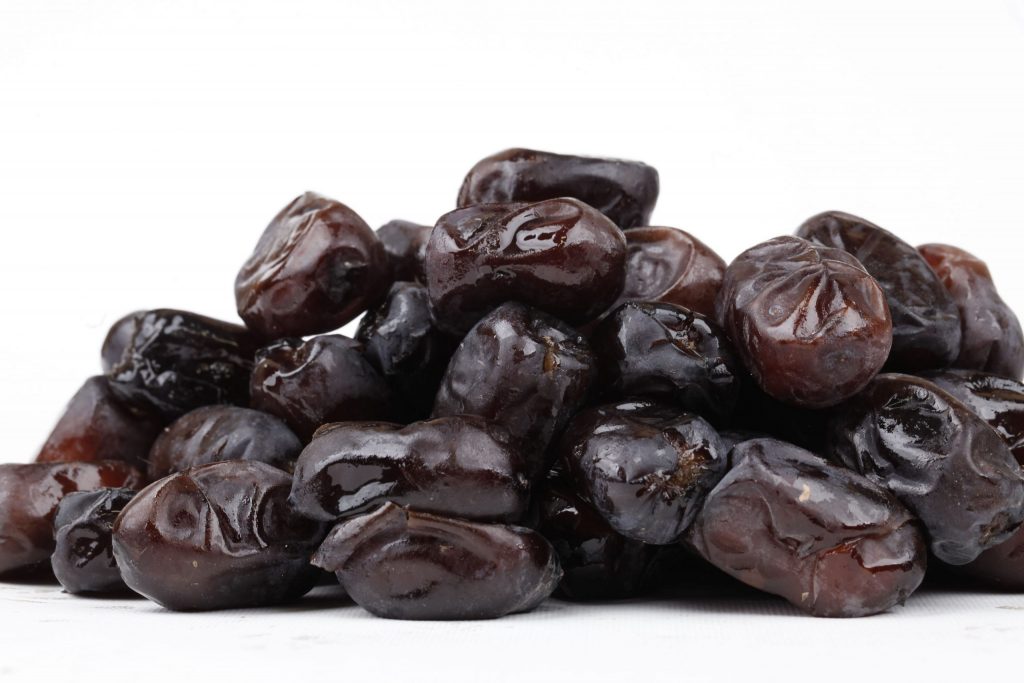
Kurma is the Malay word for dates, and in Malay, borong kurma on its own means dates bought wholesale. Whether you run a shop, cater for a kenduri or buy for a surau, the person standing between you and the fruit is a kurma supplier. This post looks at what a Kurma supplier actually does, and how to check the quality, range, price and paperwork before you place a borong kurma order.
What a kurma supplier actually does
Malaysia has no commercial date-growing trade. Every date sold in Malaysia is imported, so every kurma supplier here is either an importer or buys from one.
Upstream, the fruit passes through packinghouses in the growing countries. The FAO handbook Date Palm Cultivation notes that private packinghouses usually buy the fruit as raw material directly from growers. Bulk fruit is usually packed in cardboard boxes, and the usual weight is 5 kg or 15 lbs, depending on where the fruit was produced or will be sold. FAO adds that bulk fruit may be handed over to be repacked in the country where it is to be marketed, with retail packing done to the customer's requirements.
So it pays to ask a supplier which varieties and grades it brings in, how the fruit is stored after it lands, and whether you will receive a 5kg pack or small packs ready for the shelf.
Range: which varieties a supplier carries
A wide range lets a shop serve more than one kind of customer. To show what "range" looks like in practice, the table below counts the listings for eight of the varieties in one Malaysian wholesaler's price list, checked in November 2026.
| Variety | Origin | Description | Listings (in stock) |
|---|---|---|---|
| Ajwa | Madinah, Saudi Arabia | Small, roundish, near-black, finely wrinkled skin, soft | 13 (5) |
| Safawi | Madinah region, Saudi Arabia | Longer than Ajwa, dark brown to black, soft and chewy | 9 (7) |
| Mariami | Iran | Dark, semi-dry, chewy | 9 (4) |
| Medjool | Originated in Morocco; these listings are labelled Palestine | Large, very soft, rich caramel taste | 9 (5) |
| Deglet Noor | Tunisia / Algeria | Golden, translucent, semi-dry | 10 (1) |
| Rotab 12×600g, incl. Rotab Mazafati AAA | Mazafati: Bam, Kerman province, Iran | Dark, very soft, high moisture | 3 (0) |
| Sukari (Rotab Sukkary) | Al-Qassim, Saudi Arabia | Golden-amber, very sweet | 1 (1) |
| Mabroom | Madinah region, Saudi Arabia | Long and slender, reddish-brown, semi-dry, chewy | 1 (0) |
Two things stand out. A long list of names is not the same as a long list of stock: only one of the ten Deglet Noor listings was in stock that day. And within one variety, the listings differ by grade and pack size, so "we carry Ajwa" can mean anything from a 1kg pack to a 5kg pack in several grades. For Medjool dates, the five in-stock listings ran from a single 900g box up to eight 900g packs.

Quality: what you can actually check
"Premium quality" on a price list tells you little. Grades such as A, AA, AAA and Jumbo are each importer's own size sorting, not an international standard. One supplier's AA may match another's A, so compare the fruit, not the letters.
Paperwork is easier to check than adjectives. In FAO's description of packinghouse quality control, test results are written on a specific form and kept for follow-up according to the demands of clients. Buyers whose quality systems require it ask that suppliers be authorised either through a recognised certifying body or against the client's own specification, including documented traceability. FAO names ISO 9000 and HACCP as two such quality systems.
Labels matter too. FAO notes that in most importing countries the law demands that the weight, country of origin, quality and date of expiry appear on the package. A supplier who can show all four on the pack you will receive is giving you something you can hold them to.
Price: what a borong kurma order costs
"Competitive pricing" is easy to claim. Real numbers are more useful. Here is the per-kilo spread across every in-stock listing of each variety that had stock in the same wholesaler's list, checked in November 2026. These are the current listed prices, not the higher regular prices shown beside them.
| Variety | Lowest per kg (in stock) | Highest per kg (in stock) |
|---|---|---|
| Ajwa | RM23 (Ajwa Premium A No.1 (Small) 2026, 5kg, RM115) | RM44 (1kg Ajwa AAA VIP (Large), RM44) |
| Safawi | RM16 (Safawi Premium A No.2 (Mini) 2026, 5kg, RM80) | RM45 (1kg Safawi AAA Jumbo, RM45) |
| Mariami | RM15 (Mariami A Normal 2026, 5kg, RM75) | RM40 (1kg Mariami AAA, RM40) |
| Medjool | RM56 (Medjool Palestin Premium Jumbo 2026, 5kg, RM280) | RM77.78 (900g Medjool Palestin Jumbo box, RM70) |
| Deglet Noor | RM88 for 12 × 400g (4.8kg), the only one in stock | |
| Sukari | RM63 for Rotab Sukkary Premium 3kg, the only one in stock | |
In this list, the cheapest kilo of Medjool still cost more than the dearest in-stock kilo of Ajwa, Safawi or Mariami. Within Ajwa, Safawi and Mariami, the lowest rate came from a 5kg pack and the highest from a 1kg pack, but grade labels differ between those packs, so part of the gap may be grade, not pack size. When you compare suppliers, compare the same pack size and the full grade name. For a closer look at Ajwa grades and pack sizes, see Exploring Kurma Ajwa Borong and Malaysian Date Preferences, and for what changes when you buy in bulk, The Benefits of Purchasing Kurma Murah Borong.
Consistency: stock you can count on
Reliable supply sounds simple until you read a stock column. In the checked list, 23 of 58 date listings were in stock. That is a snapshot from one day, not a trend, but it shows why the first question to any supplier should be "is this in stock now?"
Mazafati is a useful example. It is cold-stored and sold year-round, and it needs refrigeration. Yet all three Rotab 12×600g listings, including Rotab Mazafati AAA, were out of stock on the day the list was checked. Year-round availability across the market does not mean one supplier has it on any given day.
Timing matters as well. Demand for dates peaks before and during Ramadan, and Hari Raya, weddings (hantaran), kenduri and umrah gifts are other peaks. Ask your supplier about stock for those weeks well before they arrive.
Choosing the right kurma supplier: questions to ask
Reputation and reviews help, but specific questions get specific answers. Before your first borong kurma order, ask:
- Is this exact pack in stock today, and if not, when is the next arrival?
- What is the full pack name and grade as printed on the label?
- Will the pack show weight, country of origin, quality and expiry date?
- Can you show any certification or quality records, such as ISO 9000 or HACCP?
- Can I have a 1kg sample before ordering 5kg packs?
- Do you repack into smaller packs or add my own label, and at what cost?
- What happens if a pack arrives damaged or with insects?
When the order arrives
FAO says each consignment should be sampled, because fruit is sometimes stored for months before shipment and the quality needs checking. Open every pack, not just the first one. For defects caused by insects and mites, FAO notes that tolerance differs by standard and goes up to 4%, and in all cases there must be no live insects inside the package.
Storage starts the moment the packs come off the van. FAO points out that cardboard is sensitive to humidity and that stored produce must be protected from insects and rodents. Mazafati needs refrigeration. Buyers new to bulk orders can also read Dates - Buying Date Fruits in Malaysia for pack sizes and label checks.
A good supplier shows you the details
The right kurma supplier is the one who answers the stock, label and grade questions plainly, lets you sample before a large order, and quotes prices for the exact pack you want. For borong kurma, those are details you can check, which a "high quality" banner is not. More about this site is on the About Us page and the contact page.